by Traverse Legal, reviewed by Enrico Schaefer - October 27, 2026 - Airbnb, Business Law, Complex Litigation, Short Term Rentals
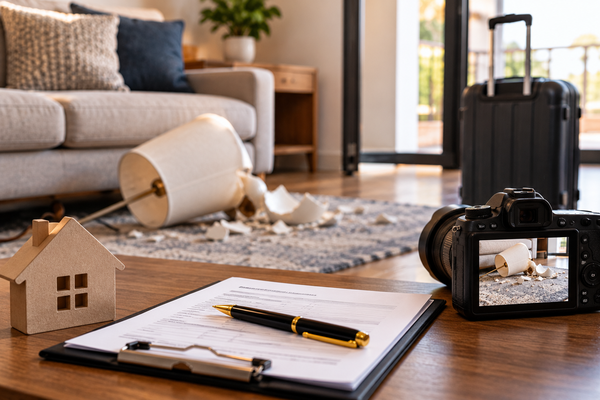
A guest damages your Airbnb property, leaving you with costly repairs, lost bookings, and a reimbursement claim that may not cover your losses. Even when the damage is clear, recovering compensation can become complicated.
Airbnb offers Host Damage Protection through AirCover, but reimbursement depends on specific terms, exclusions, and documentation requirements. Your personal insurance may also have restrictions on short-term rentals, leaving you uncertain about which coverage applies.
An Airbnb property damage claim lawyer helps hosts evaluate their rights, document financial losses, and pursue compensation through available contractual and insurance remedies. Legal assistance becomes especially valuable when substantial property damage creates disputes over responsibility, repair costs, or payment.
Property damage in short-term rentals can range from broken furniture to serious structural damage requiring extensive repairs. The financial impact often extends beyond replacing damaged items, particularly when a property cannot accommodate upcoming reservations.
Common losses include:
Under Airbnb’s Host Damage Protection terms, certain property damage and related booking income losses may qualify for reimbursement. However, eligibility depends on the circumstances and applicable program requirements.
A property damage lawyer can help distinguish recoverable losses from excluded expenses and determine whether additional claims against responsible parties or available insurance coverage should be considered.
Guest damage can take several forms, and the cause often determines whether reimbursement is available. Airbnb hosts should distinguish accidental damage from intentional misconduct, ordinary wear, and losses unrelated to a guest’s stay.
Common situations include:
Proving a guest caused the damage is often the central challenge. Hosts should preserve evidence connecting the loss to the reservation rather than assuming the guest is responsible because the damage was discovered after checkout.
Whether these losses qualify for reimbursement depends on Airbnb’s terms, the cause of damage, and any applicable insurance coverage.
AirCover for Hosts includes Host Damage Protection, which offers up to $3 million in reimbursement for certain eligible losses when responsible guests fail to pay. However, Host Damage Protection is not an insurance policy, and the advertised limit does not guarantee payment for every claim.
Airbnb’s program excludes or limits certain losses, including:
AirCover also distinguishes damage to a host’s property from liability claims involving guests or other third parties. Separate Host Liability Insurance may apply to qualifying third-party claims.
Hosts should review the applicable terms before relying on AirCover to cover substantial repairs or lost rental income. An Airbnb property damage claim lawyer can evaluate whether a disputed loss falls within the program’s protections and identify other potential recovery options.
Airbnb property damage claims can become disputed when the available evidence does not establish the cause, extent, or value of the loss. Even substantial damage does not guarantee full reimbursement under AirCover.
Common reasons for claim disputes include:
Airbnb generally requires hosts to submit a reimbursement request through its Resolution Center within 14 days of the responsible guest’s checkout. Additional documentation and procedural requirements may apply.
An attorney can review the denial, identify disputed findings, and evaluate whether the host has grounds to challenge the decision under the applicable terms.
AirCover should not be the only protection a short-term rental owner relies on. Homeowners insurance, landlord policies, and commercial rental coverage may provide additional protection, but their terms differ significantly.
A standard homeowners policy may restrict coverage for business or rental activity. Hosts should determine whether their policy expressly covers short-term rentals rather than assuming guest damage qualifies as an ordinary household loss.
Before filing an insurance claim, review:
Airbnb also advises hosts to maintain appropriate personal insurance because AirCover does not replace homeowners, renters, or other necessary coverage.
An Airbnb property damage claim lawyer can review overlapping policies, assess potential sources of recovery, and help address disputes involving denied or undervalued claims.
Airbnb’s Host Liability Insurance provides up to $1 million in coverage for certain claims involving injuries or property damage to guests and other third parties. However, this coverage serves a different purpose from Host Damage Protection.
Host Liability Insurance generally addresses situations where a host is legally responsible for another person’s injury or property damage. It does not cover damage to the host’s own rental property.
Key exclusions and limitations include:
Airbnb’s Host Liability Insurance Program Summary explains these restrictions and the program’s coverage conditions.
A property damage lawyer can review the relevant policies to determine which coverage applies and whether an insurer has a valid basis for denying a claim.
When a guest damages your rental property, prompt action can protect your reimbursement rights. Delays may make it harder to establish responsibility, document repair costs, or satisfy applicable claims requirements.
Hosts should follow these steps:
Airbnb currently instructs hosts to submit reimbursement requests within 14 days of the responsible guest’s checkout. The guest generally has 24 hours to respond before the host can seek reimbursement through Host Damage Protection if payment is declined, incomplete, or unanswered.
Hosts should avoid discarding damaged property or completing nonemergency repairs before preserving available evidence. When losses are substantial or responsibility is disputed, an Airbnb property damage claim lawyer can help assess the evidence and identify the appropriate recovery process.
Strong documentation can make the difference between a supported property damage claim and a disputed reimbursement request. Hosts should preserve evidence showing the property’s condition before and after the guest’s stay.
Important records include:
Where available, pre-arrival inspection records can help establish the property’s condition before the reservation.
When property damage involves suspected theft, vandalism, or other criminal conduct, hosts should consider filing a police report with local law enforcement.
A police report creates an official record of the reported incident and may support subsequent insurance or reimbursement claims. However, filing a report does not automatically establish the guest’s liability or guarantee compensation.
Hosts should provide accurate information, preserve supporting evidence, and retain a copy of the report. An Airbnb property damage claim lawyer can assess whether the report supports further legal action or an existing claim.
When Airbnb or an insurance provider disputes a property damage claim, an attorney can help determine whether the denial is supported by the applicable terms. This involves reviewing the evidence, identifying potential legal claims, and evaluating the losses the host may be entitled to recover.
An Airbnb property damage claim lawyer can assist with:
Available remedies depend on the governing contracts, applicable state law, and evidence establishing responsibility. An attorney can help hosts pursue supported claims without overstating their entitlement to compensation.
Disputes often arise over the amount of damage, the cost of repairs, or whether the loss qualifies for reimbursement. Insurance adjusters may question replacement costs or determine that specific expenses fall outside the policy.
An attorney can challenge those findings using repair estimates, photographs, receipts, and other supporting records. Where appropriate, counsel may also communicate with Airbnb’s representatives regarding disputed reimbursement decisions.
The negotiation process should focus on:
If negotiations fail, an attorney can evaluate whether litigation, arbitration, or another dispute resolution process is available under the governing agreement and applicable law.
Substantial property damage can threaten the profitability of a short-term rental business. At Traverse Legal, our attorneys help property owners assess contractual disputes, evaluate available remedies, and pursue legally supported claims.
As a founding partner of Traverse Legal, PLC, he has more than thirty years of experience as an attorney for both established companies and emerging start-ups. His extensive experience includes navigating technology law matters and complex litigation throughout the United States.

This page has been written, edited, and reviewed by a team of legal writers following our comprehensive editorial guidelines. This page was approved by attorney Enrico Schaefer, who has more than 20 years of legal experience as a practicing Business, IP, and Technology Law litigation attorney.
