by Traverse Legal, reviewed by Enrico Schaefer - August 11, 2026 - Account Deactivation or Termination, Airbnb, Short Term Rentals
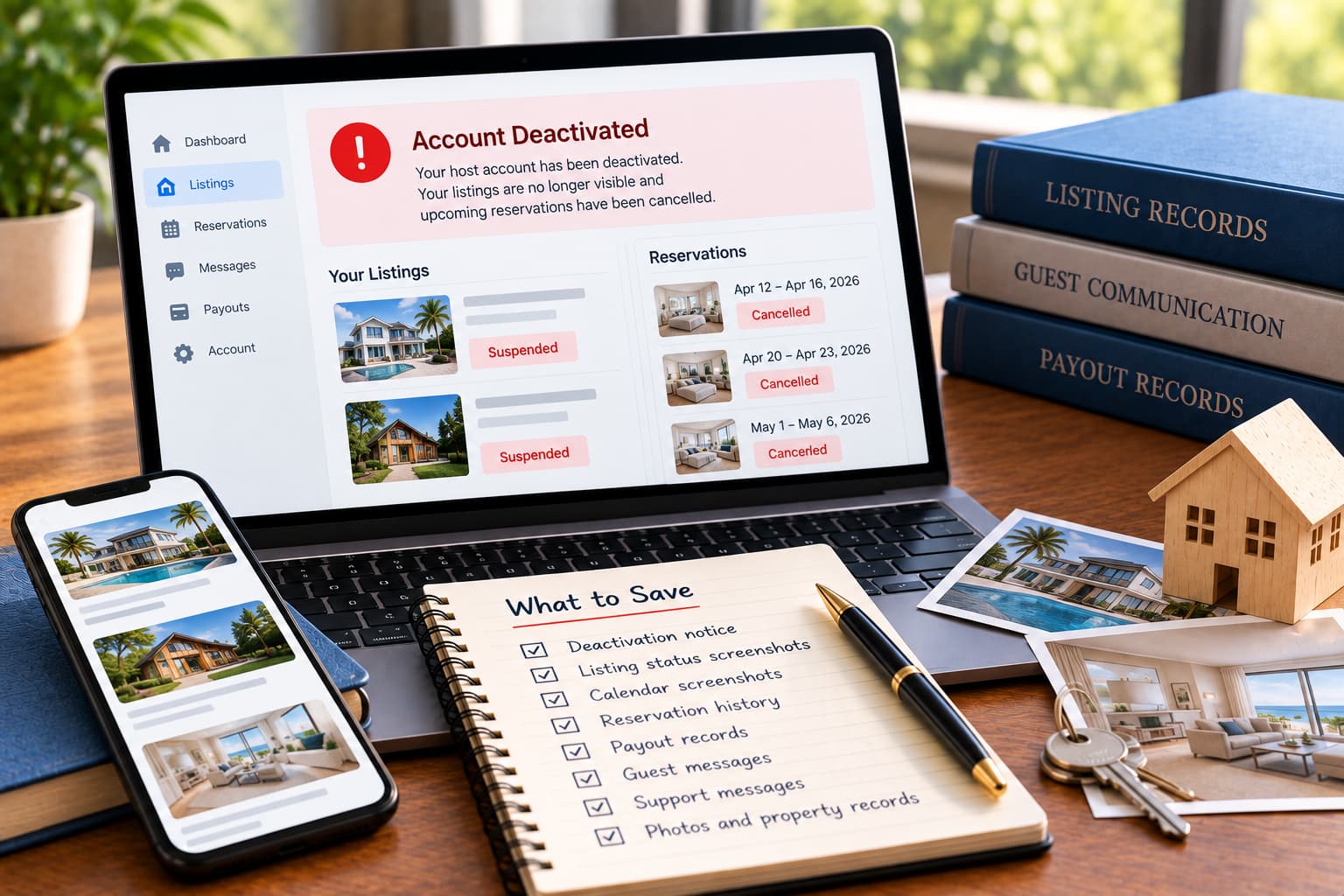
If VRBO deactivated your account, the impact can be immediate.
Your listing may be suspended. Your calendar may be blocked. Confirmed bookings may be cancelled. Payouts may be delayed or held. You may also lose access to messages, reservation records, or account tools you need to understand what happened.
For hosts who rely on VRBO income, this is more than a support issue. It can affect cash flow, guest communication, owner obligations, cleaning schedules, and future bookings.
VRBO disputes can look similar to Airbnb disputes in some ways. Both involve platform control, guest reservations, payout issues, and account access. But you should not assume the process is identical. Each platform has its own terms, internal review process, and dispute path.
This article explains what to save, what to avoid, how to respond, and when legal options may apply after a VRBO host account deactivation.
Attorney Enrico Schaefer has prosecuted more than 500 arbitration cases against Airbnb on behalf of hosts. Over two decades of practice, the firm has recovered multi-million dollar awards and settlements for hosts who were wrongfully deactivated, had their payouts frozen, or lost reservation income when Airbnb cancelled bookings.
Prior results do not guarantee a similar outcome. Every case turns on its specific facts. This page is attorney advertising.
VRBO may deactivate, suspend, or restrict a host account for several reasons. Sometimes the issue is tied to an alleged policy violation. Other times, it may involve a guest complaint, safety concern, payment issue, identity review, or listing-level restriction.
The reason matters because it affects what you should save and how you should respond.
VRBO may suspend or restrict a host account based on an alleged platform rule violation.
That does not automatically mean VRBO acted correctly or incorrectly. It means the host should slow down, save the notice, and identify exactly what VRBO said.
If the notice mentions a rule, policy, standard, or prohibited conduct, save the full message. Do not summarize it from memory. Your response should address the specific issue VRBO raised.
Guest complaints may trigger an account review, listing restriction, or suspension.
If the issue involves a guest complaint, save guest messages, reservation details, photos, check-in records, house rules, maintenance records, and any other property records connected to the stay.
The goal is to build a timeline. VRBO should be able to see what happened, when it happened, what the guest said, and what records support your position.
VRBO may also restrict access if there are payment, identity, tax, or account verification concerns.
If that happens, save every notice and support message. Keep screenshots of your account status, payout status, and any instructions VRBO gives you.
Do not guess at the issue. If VRBO’s notice is vague, your response should stay factual and ask what information is needed to complete the review.
Sometimes VRBO does not fully deactivate the host account, but it restricts a listing or blocks calendar access.
Hosts may describe this as “VRBO banned my listing” or “VRBO suspended my host account.”
A listing-level restriction can still cause serious financial loss. If confirmed bookings are cancelled, future dates are blocked, or payout access changes, save screenshots immediately.
Keep listing restrictions separate from full account deactivation when documenting the issue. Both matter, but they may affect the legal analysis differently.
After VRBO deactivates or suspends your account, save records before sending more messages.
Start with the notice itself. Save the full VRBO deactivation or suspension notice, including the date, sender, reason given, and any instructions for appeal or review.
Then document the account and listing status.
Save:
If bookings were cancelled, organize the records by property and date. If payouts are being held, keep those records separate from future lost income.
The goal is to create a clear timeline showing what VRBO did, when it happened, what income was affected, and what records support your position.
After a VRBO suspension or deactivation, avoid sending angry messages to VRBO. Emotional responses can distract from the facts and may hurt your position later.
A VRBO deactivation may become a legal issue when the platform decision causes financial loss and the internal review process is not working.
This may happen when VRBO suspends the host account without a clear explanation, bans a listing that generated meaningful income, cancels confirmed bookings, or holds payouts.
The concern is stronger when the host operates multiple properties or has strong records showing financial loss.
A VRBO deactivation may need legal review when:
If the issue affects a vacation rental business, not just one booking, it may be time to review the broader legal options. Learn more about Traverse Legal’s vacation rental practice here: Vacation Rental Law.
If VRBO deactivates your host account or bans your listing, the right next step depends on VRBO’s notice, the amount of financial loss, and whether the platform gives you a meaningful review path.
Start with VRBO’s internal appeal or support process if one is available.
Keep the response factual and organized. Identify the account, listing, reservation, or payout issue involved. Explain what happened in a short timeline and attach records that support your position.
Avoid long emotional messages. The goal is to make the issue easy to review.
A demand letter may make sense when the loss is documented and VRBO is not responding clearly.
This can help frame the dispute before formal escalation. A demand letter can identify the account issue, cancelled bookings, withheld payouts, and financial impact. It is strongest when the host has already organized the records.
The available dispute process depends on VRBO’s applicable terms.
Platform disputes often turn on the platform’s terms, notice requirements, and dispute process. That means the next step may involve arbitration or another contract-based procedure depending on the terms that apply to the account.
For a related overview of how platform arbitration can work, see: How to File Arbitration Against Airbnb.
That article is Airbnb-specific, but it may help hosts understand the general difference between support escalation and a formal arbitration process.
VRBO and Airbnb disputes can look similar from the host’s perspective. Both may involve platform control, account access, cancelled bookings, guest messages, payout issues, and lost income.
But the details may differ because each platform has its own terms, policies, and dispute process.
For comparison, see: Airbnb Deactivated My Account: What Can I Do?
Traverse Legal represents hosts and short-term rental operators across the full lifecycle of the business. Account deactivation arbitrations. AirCover and guest damage disputes. Chargebacks and payout holds. Property management and arbitrage contracts. Owner agreements. Corporate formation and financing. Legal structuring work coordinated with our clients’ tax accountants on cost segregation and bonus depreciation planning. If you run a short-term rental business, we have very likely handled your problem before.
Prior results do not guarantee a similar outcome. Every case turns on its specific facts. This page is attorney advertising.
Before speaking with a lawyer, organize the records that show what VRBO did and how the deactivation affected your business.
Bring or save:
The goal is to make the issue easy to evaluate. A lawyer should be able to see the platform notice, what happened to the listing or account, what income was affected, and what steps you already took through VRBO support.
If VRBO deactivated your host account, suspended your listing, or held payouts tied to your vacation rental business, start by saving the account notice, booking records, payout history, calendar screenshots, and guest messages.
Traverse Legal can review the platform history, financial impact, and potential legal options. To discuss your situation, book a consultation through the contact form or call 866-936-7447.
Save the deactivation notice, listing status, reservation history, payout records, guest messages, and support responses. Then review whether VRBO gave you an appeal or account review path before sending more messages.
VRBO may provide an internal review or support path depending on the notice and issue involved. Keep any appeal factual, organized, and supported by records.
Save the notice exactly as VRBO sent it and document the listing status, calendar, cancelled bookings, and payout impact. If the reason is unclear, keep your response factual and ask what information is needed to complete the review.
That depends on the facts, the amount at stake, and VRBO’s applicable terms. Platform disputes often depend on contract terms, notice requirements, and the dispute process that applies to the account.
Not exactly. VRBO and Airbnb disputes may involve similar issues, like account access, cancelled bookings, and payouts, but each platform has its own terms, policies, and process.
Consider contacting a VRBO lawyer if the deactivation caused substantial lost income, cancelled confirmed bookings, withheld payouts, or account restrictions affecting multiple properties. Legal review may also make sense if VRBO has not explained the decision or the appeal process is stalled.
As a founding partner of Traverse Legal, PLC, he has more than thirty years of experience as an attorney for both established companies and emerging start-ups. His extensive experience includes navigating technology law matters and complex litigation throughout the United States.

This page has been written, edited, and reviewed by a team of legal writers following our comprehensive editorial guidelines. This page was approved by attorney Enrico Schaefer, who has more than 20 years of legal experience as a practicing Business, IP, and Technology Law litigation attorney.
